Your cabinet painting project could go one of two ways: you could end up with a kitchen that looks like it belongs in a magazine, or you could end up regretting your decision for the next decade. The difference often comes down to one choice you make at the very beginning. Should you paint or stain kitchen cabinets? It sounds like a simple question, but the answer depends on your current cabinets, your style preferences, your budget, and how much maintenance you’re willing to do down the road.
Most homeowners get stuck right here. They stand in the paint aisle at the hardware store, staring at color swatches, wondering if they should even be looking at paint at all. Maybe stain would look better? Maybe it would last longer? The confusion is real, and it costs people time, money, and satisfaction with their finished kitchen.
This article breaks down everything you need to know to make the right choice for your home. No fluff. No sales pitch. Just the honest truth about what works, what doesn’t, and what questions you should be asking before you commit.
Key Takeaways:
- Common painting mistakes are easy to fix with the right tools and techniques.
- Don’t rush to repaint the whole wall—spot fixes often do the trick.
- Letting paint dry fully is key before attempting repairs.
- Many mistakes are preventable with good prep and patience.
What Happens When You Paint Cabinets
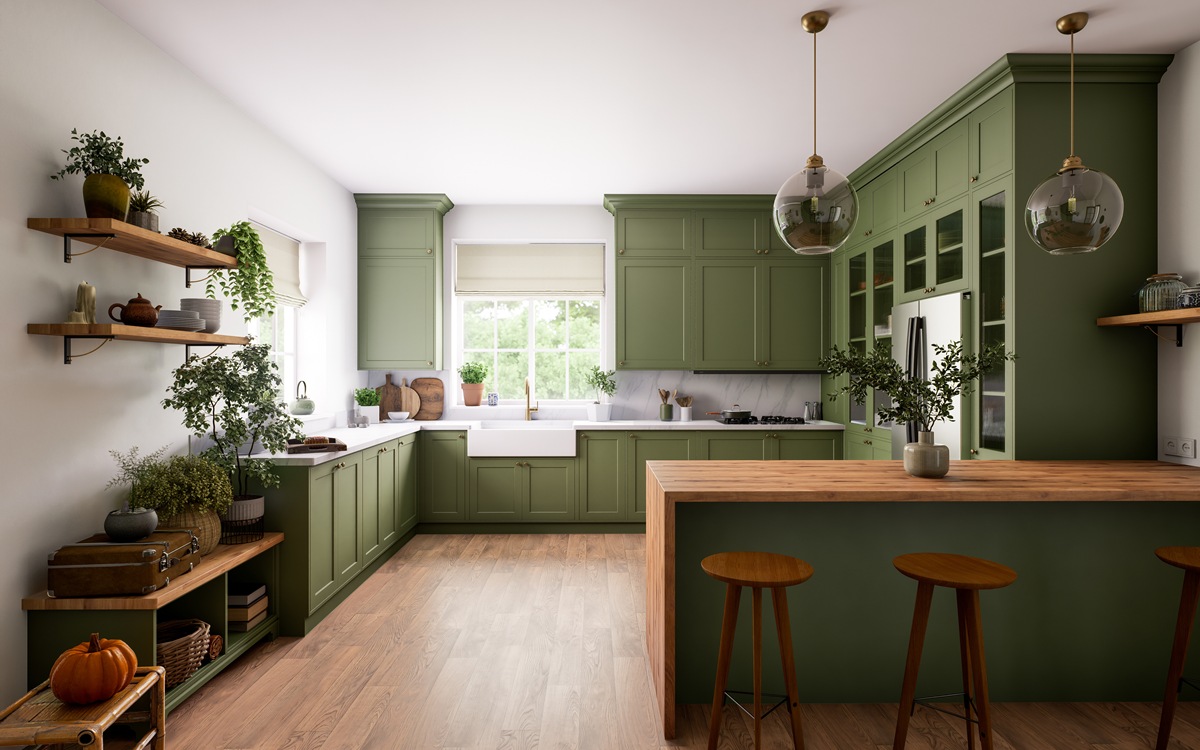
Paint sits on top of the wood surface. It creates an opaque layer that completely covers whatever is underneath, whether that’s the original wood grain, old stain, or previous paint. This is why paint is so popular for kitchen makeovers. You can take dark, dated oak cabinets and turn them bright white without any trace of what was there before.
The process to paint or stain kitchen cabinets is quite different for each option. With paint, you’re building up layers. A typical paint job includes cleaning, sanding, priming, and then two or more coats of paint. Each layer needs to dry and often needs light sanding between coats to get a smooth finish.
Paint adhesion is the biggest concern. If the prep work isn’t done right, paint will peel, chip, and bubble within months. This is why professional painters spend so much time on surface preparation before any paint touches the cabinet doors.
The finish options with paint are also more varied. You can choose flat, satin, semi-gloss, or high-gloss sheens. Most kitchen cabinets look best with a semi-gloss or satin finish because these are easier to clean and hold up better to the humidity and grease that come with cooking.
What Happens When You Stain Cabinets
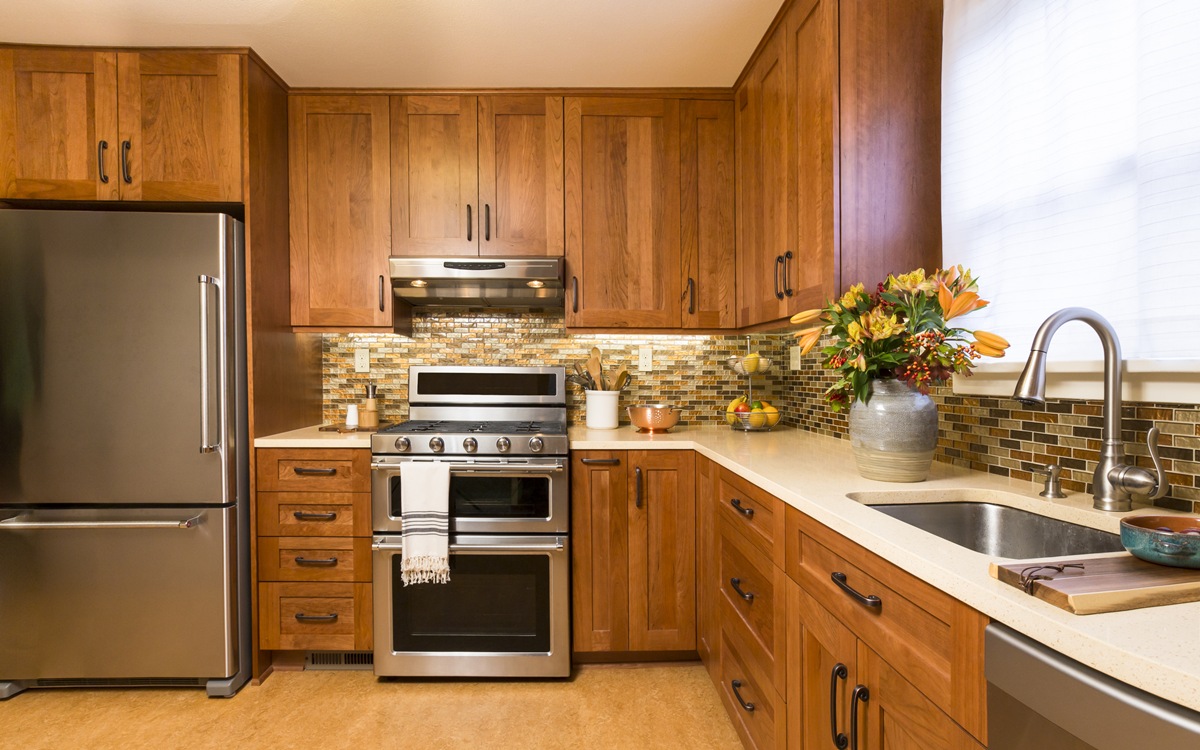
Stain works completely differently. Instead of sitting on top of the wood, stain soaks into the wood fibers. It changes the color of the wood while allowing the natural grain pattern to show through. This is why stain only works on real wood, and why the results vary depending on the type of wood you’re staining.
Oak absorbs stain differently than maple. Pine takes stain unevenly because of its soft grain. Cherry has natural color variations that affect how stain looks across different boards. Understanding your wood type is critical before choosing stain.
The cabinet painting project mindset doesn’t apply the same way to staining. With stain, you’re not covering problems. You’re enhancing what’s already there. Any scratches, dents, water damage, or wood filler will show through the stain. In some cases, they’ll stand out even more than they did before.
Stain also requires a topcoat for protection. The stain itself just adds color. You need polyurethane, lacquer, or another clear finish on top to protect the wood from moisture, heat, and daily wear. This topcoat is what gives stained cabinets their durability.
The Honest Pros and Cons of Painting Cabinets
Painting your cabinets comes with real advantages that make it the right choice for many homeowners. But it also has downsides that nobody likes to talk about. Here’s the full picture.
Advantages of painting:
- Paint gives you complete creative freedom. Want navy blue cabinets? Sage green? Bright white? You can have any color you can imagine. This flexibility is the main reason paint dominates kitchen renovation trends right now.
- Paint also covers imperfections better than stain. If your cabinets have minor damage, wood filler repairs, or mismatched wood types, paint hides all of it. You end up with a uniform look across every door and drawer front.
- Painted cabinets are easier to clean in most cases. A damp cloth wipes away grease and food splatters without much effort, especially with semi-gloss or glossier finishes.
Disadvantages of painting:
- Painted surfaces show wear more obviously. A small chip in white paint reveals the primer or wood underneath. High-traffic areas like drawer pulls and door edges tend to wear faster, and that wear is visible.
- The prep work is extensive. Cutting corners on cleaning, sanding, or priming leads to peeling and adhesion problems. A professional paint job takes longer and costs more than most homeowners expect.
- Some painted finishes feel like plastic. Lower-quality paints or improper application techniques can leave cabinets looking cheap and artificial rather than crisp and clean.
The Honest Pros and Cons of Staining Cabinets
Staining has its own set of trade-offs. For the right situation, it’s the better choice. For the wrong situation, it’s a recipe for disappointment.
Advantages of staining:
- Stain showcases the natural beauty of wood. If you have high-quality solid wood cabinets with attractive grain patterns, stain lets that character shine. Many homeowners prefer this warmer, more organic look over the solid colors of paint.
- Stained cabinets hide minor wear better. Small scratches and dings blend into the wood grain instead of standing out. The natural variation in stained wood camouflages everyday damage.
- When you paint or stain kitchen cabinets and choose stain, you often get a more timeless result. Wood tones have been popular in kitchens for decades and will likely stay that way. Trendy paint colors can date your kitchen quickly.
Disadvantages of staining:
- Stain only works on bare wood. If your cabinets are already painted, laminate, or MDF, staining isn’t an option without complete replacement or extensive stripping.
- Color options are limited. You’re working within the range of wood tones, from light natural to dark espresso. You can’t get a true gray, blue, or white with stain alone.
- Application is less forgiving. Stain shows every imperfection in the wood surface. Uneven sanding leaves blotchy areas. End grain absorbs more stain than face grain, creating dark spots. Getting a consistent finish takes skill.
How to Decide: Paint or Stain for Your Kitchen
The right choice depends on your specific situation. Here are the questions that actually matter:
What are your cabinets made of?
Solid wood cabinets can be painted or stained. MDF, particleboard, laminate, and thermofoil cabinets can only be painted, and even then, some materials don’t hold paint well long-term.
What condition are your cabinets in?
Cabinets with damage, repairs, or inconsistent wood are better candidates for paint. Cabinets in excellent condition with attractive wood grain are good candidates for stain.
What’s your desired look?
If you want a specific color that isn’t a wood tone, paint is your only option. If you want to see wood grain and prefer a natural aesthetic, stain is the way to go.
How much maintenance are you prepared to do?
Both finishes require maintenance, but the type differs. Painted cabinets need touch-ups when chips appear. Stained cabinets may need occasional recoating of the topcoat to maintain protection.
What’s your budget?
For a cabinet painting project, the cost depends heavily on whether you’re doing the work yourself or hiring professionals. In general, painting existing cabinets costs less than stripping and restaining them, especially if the cabinets have an existing finish that needs to be removed before staining.
What About Gel Stain?
Gel stain is a hybrid product that confuses a lot of homeowners. It’s marketed as a way to stain over existing finishes without stripping, which sounds like the best of both worlds.
The reality is more complicated. Gel stain is thicker than regular stain and sits on top of the surface more than it penetrates. It can create a stained look over painted or sealed surfaces. But the results vary widely depending on the existing finish, the application technique, and the specific product used.
Gel stain works best for achieving a darker finish over existing stain. Using it over paint or laminate produces mixed results. Some homeowners love the outcome. Others end up with a sticky, uneven mess.
If you’re considering gel stain, test it on an inconspicuous area first. What works on a sample board may look completely different on your actual cabinets.
The Prep Work Nobody Wants to Do
Whether you paint or stain kitchen cabinets, preparation is where most projects succeed or fail. Skipping steps here costs more time and money in the long run when you have to redo the work.
For painting:
Remove all doors, drawers, and hardware. Label everything so you know where it goes back. Clean all surfaces with a degreaser to remove years of cooking residue. Sand to create texture for the primer to grip. Fill any holes or damage with wood filler. Sand again. Wipe away all dust. Apply primer and let it cure fully before painting.
For staining:
Remove all doors, drawers, and hardware. Strip any existing finish completely. Sand the bare wood, starting with coarser grit and working to finer grit. Remove all sanding dust. Apply wood conditioner if using a soft wood like pine. Apply stain evenly, wiping excess before it dries. Let the stain cure. Apply protective topcoat.
The prep work for staining takes longer when starting from finished cabinets because stripping the old finish is labor-intensive. The prep work for painting takes longer when dealing with grease buildup or multiple layers of old paint.
When to Hire a Professional
Some homeowners have the skills, time, and patience to refinish cabinets themselves. Many don’t. Here’s how to know which camp you’re in.
Consider hiring a professional if:
- Your cabinets have intricate details, raised panels, or hard-to-reach areas. These are difficult to finish evenly without professional spray equipment.
- You want a factory-smooth finish. Brush and roller marks are nearly impossible to avoid completely without spraying.
- Your time is worth more than the cost of labor. A professional crew can finish in days what takes a homeowner weeks of evenings and weekends.
- You’re not comfortable with the chemicals involved. Strippers, primers, and finishes require proper ventilation and safety precautions.
Consider doing it yourself if:
- Your cabinets have simple, flat-panel doors that are easy to sand and coat evenly.
- You have a dedicated workspace with good ventilation where doors can dry undisturbed.
- You’re willing to invest in proper supplies and take your time with each step.
- You’re comfortable with the possibility of imperfect results on your first attempt.
The Long-Term View
Kitchens take a lot of abuse. Cooking creates heat, steam, and grease. Kids slam drawers. Handles get grabbed thousands of times. Whatever finish you choose needs to hold up to real life.
Properly applied paint with a good primer will last 8 to 15 years before needing significant touch-ups or repainting. The key words are “properly applied.” Cutting corners reduces that lifespan dramatically.
Properly applied stain with a quality topcoat can last even longer because minor wear blends into the wood instead of showing as chips. But the topcoat will eventually wear down in high-use areas and need recoating.
Neither finish is truly permanent. Both require maintenance. The question is which type of maintenance fits your lifestyle and preferences.
Making Your Final Decision
You now know more about the differences between painting and staining than most homeowners ever learn. The choice comes down to your specific cabinets, your aesthetic preferences, and your realistic assessment of your skills and patience.
Paint offers unlimited colors and covers imperfections. Stain showcases natural wood beauty and hides minor wear. Both require serious prep work and proper technique to look good long-term.
If you’re still unsure, get opinions from professionals. A reputable cabinet refinishing company will look at your specific cabinets and give you honest advice about what will work best. They’ll tell you if your cabinets are good candidates for refinishing at all, or if replacement makes more sense for your situation.
Ready to Transform Your Kitchen?
The team at CYR Painting Service has helped hundreds of homeowners make the right choice for their cabinet refinishing projects. We’ll give you an honest assessment of your options, not a sales pitch. Whether painting is the right fit or staining makes more sense for your cabinets, we’ll walk you through exactly what to expect in terms of process, timeline, and results.
Call 207-410-4544 today to schedule your free consultation. Bring your questions. We’ll bring straight answers.